Food: the city funds it at zero
The most basic test of whether a government cares about the people under it is whether those people can eat. Edmonton fails that test plainly, and the failure is not hidden in a report. It is a line of people around a warehouse. Edmonton's Food Bank served an average of 34,826 people every month in 2023, up 63% from 21,385 a month in 2019 (2023 annual report). By December 2024 the executive director put the number at roughly 45,000 people a month, about ten thousand more than two years earlier. In October 2024 the food bank filled a record 47,000-plus hampers (soaring demand, Dec 2024). Faced with need on that scale, the food bank did the only thing an underfunded charity can do. It began rationing how often a hungry person is allowed to come back.
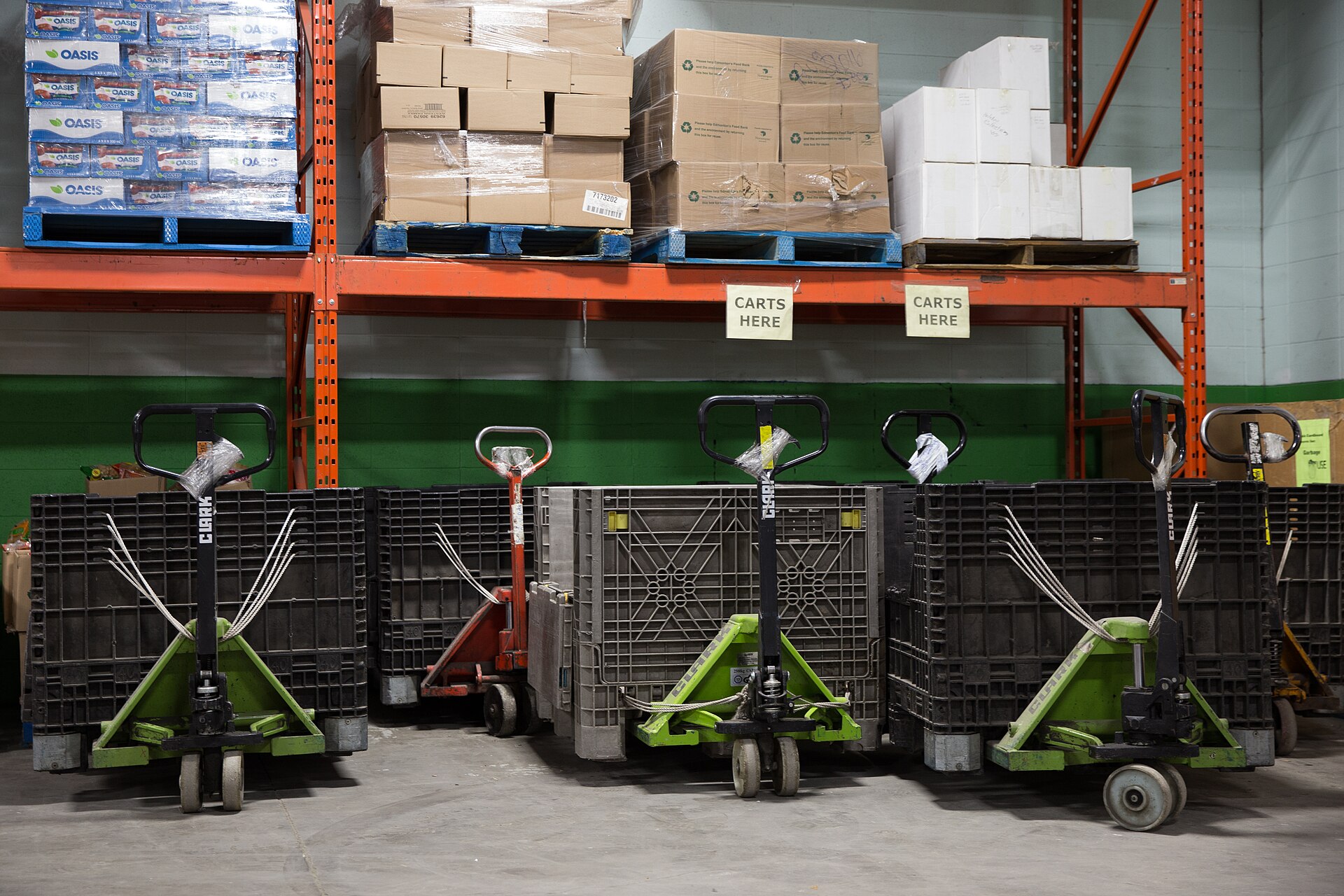
Read that response slowly, because it is the whole ideology in miniature. When demand for shelter outran supply, the city's answer was to fence off the ground people slept on. When demand for food outran supply, the answer was to cap the entitlement. That answer came from a charity the city leans on precisely so it never has to build a public one. In both cases the poor person's need is treated as the problem to be managed, not the emergency to be met. The hamper is charity, and charity always reserves the right to say you have had enough.
The numbers are not a blip
This is not a bad year that will pass. In 2023 the food bank recorded 417,908 hamper visits, representing 75,476 unique individuals. Up from 67,046 different people the year before (2024 monthly updates). The pressure sits inside a provincial catastrophe. Alberta's household food-insecurity rate reached 30.9% in 2024, with 8.7% severely food-insecure. Among the worst in the country, and part of a steady climb from about 12.3% in 2011 and 20.3% in 2022 (PROOF food insecurity 2024). Nearly a third of Alberta households could not reliably afford the food they needed, in one of the wealthiest jurisdictions on the continent, sitting on the resource that funds the whole province. Hunger here is not scarcity. It is distribution. And the arithmetic of who cannot eat is the arithmetic of low wages meeting high rent. A healthy diet ate 40.7% of a low-income Edmonton family of four's monthly budget in 2023 (Edmonton food security). When four in every ten dollars a poor family has must go to groceries before rent, before power, before the bus, the food bank is the load-bearing wall of household survival, and the city has decided that wall is somebody else's building.
Where the food-bank figures come from
The monthly-average and unique-individual counts are Edmonton's Food Bank's own published figures, drawn from its 2023 annual report and its 2024 monthly-update bulletins (annual report; monthly updates). The ~45,000/month and record-47,000-hamper figures are the executive director's statements as reported by CBC (soaring demand). The 30.9% provincial food-insecurity rate is from PROOF's analysis of the Canadian Income Survey (PROOF 2024). All figures are CAD, source year noted.
What the city spends on feeding people directly
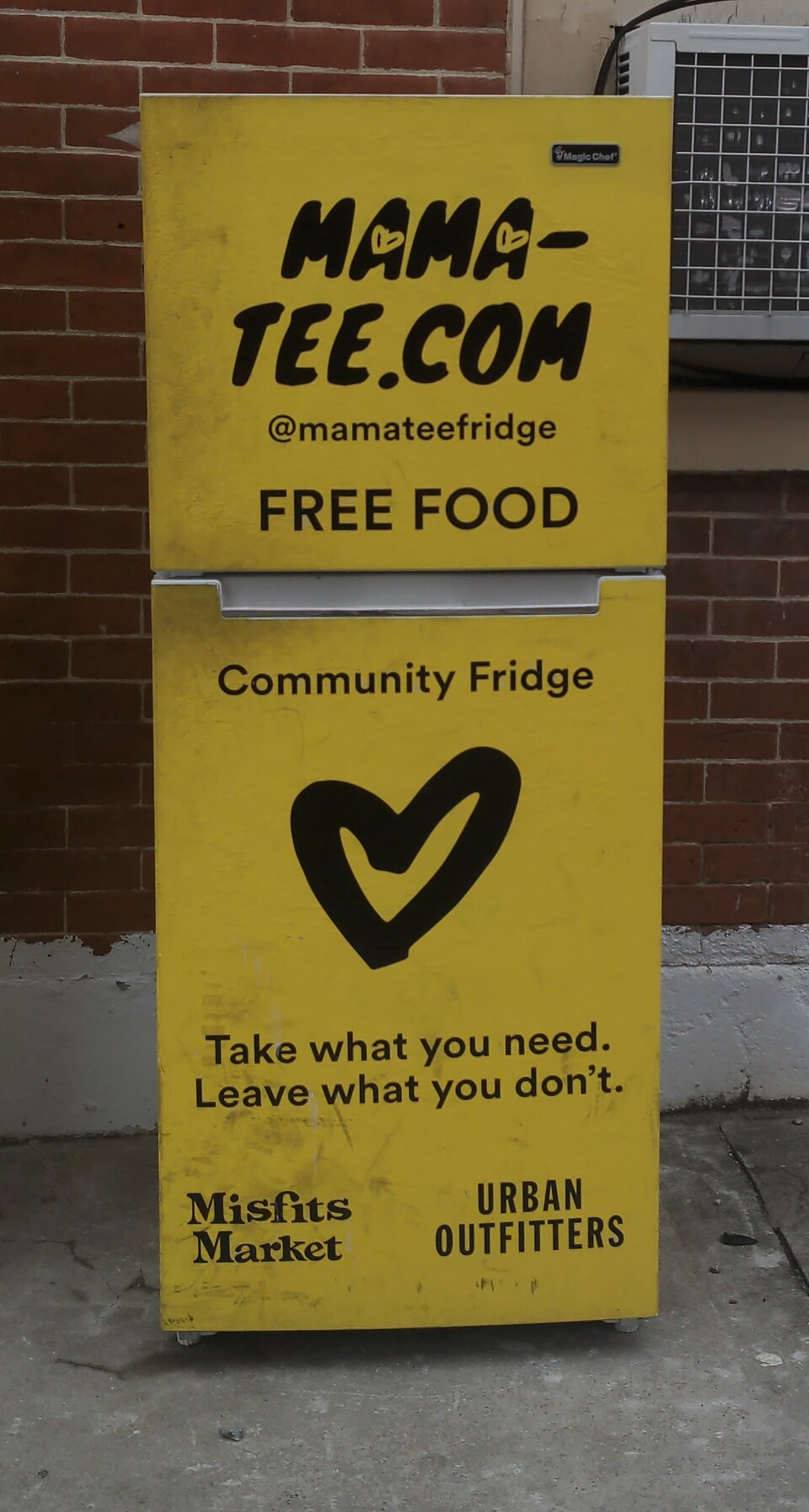
Here is the number the compassionate city does not put on a banner. On dedicated community-fridge, free-pantry, and mutual-aid food programs, the municipal contribution is zero. The infrastructure that actually puts food into the hands of the hungry outside the charity-warehouse model runs entirely on donated food, private property, and volunteer labour: the community fridge Food Not Bombs keeps stocked outside a store on Whyte Avenue, the free lunches West End Outreach hands out at noon (community fridges and mutual aid). The people feeding their neighbours for free are doing it on the city's periphery, on their own dime, with no line in any budget behind them. The mutual-aid networks are named in full among the living frontline.
Honest complication: this is an absence, not a ban
We did not find, and do not claim, that the city ordered a community fridge removed or shut a mutual-aid kitchen down. The public-space bylaws certainly shape where free food can be handed out, but the specific charge here is quieter and more damning than a raid: the city simply does not fund this work at all (community fridges and mutual aid). Frame it as non-support, not suppression. The point is not that Edmonton attacked the fridges. The point is that the only food infrastructure in the city built on the principle that a hungry person should just be able to eat, no intake, no rationing, no proof of need, exists because ordinary people built it themselves, while the government that calls itself progressive spent nothing to help.
This is the exhibit that gives the whole project its name. The left is dead: the electoral left that governs Edmonton let food-bank use nearly double and answered with rationing and a zero-dollar line. Long live the left: the living left is the person restocking a fridge on Whyte Avenue at midnight, feeding people the state decided to manage instead of feed. One of those lefts holds the budget. The other holds the food. That gap is not a policy failure to be fixed with a better program. It is the difference between charity, which manages the poor, and solidarity, which refuses to. For the machinery that keeps the budget zero-sum, a guaranteed cheque for policing beside a fight-for-scraps everything else, see the police formula and community and frontline. For the regressive logic running through the utility bills, see energy and water.