Energy and water: the city taxes you through your own utility
Edmonton owns its power and water company, and it runs that company against the people who pay its bills. EPCOR is wholly owned by the City. One shareholder: the municipality itself. And every year it hands the City a dividend drawn entirely from what residents pay to keep the lights on and the tap running. That dividend rose from $166 million in 2018 to $206 million in 2026, and since 2000 the utility has shipped roughly $2.3 billion back to city hall. Call it what it is. A city that will not tax wealth progressively has instead built a flat, hidden levy on the single thing nobody can refuse to buy, and it calls the proceeds "non-tax revenue" so the number never has to appear beside the word tax.
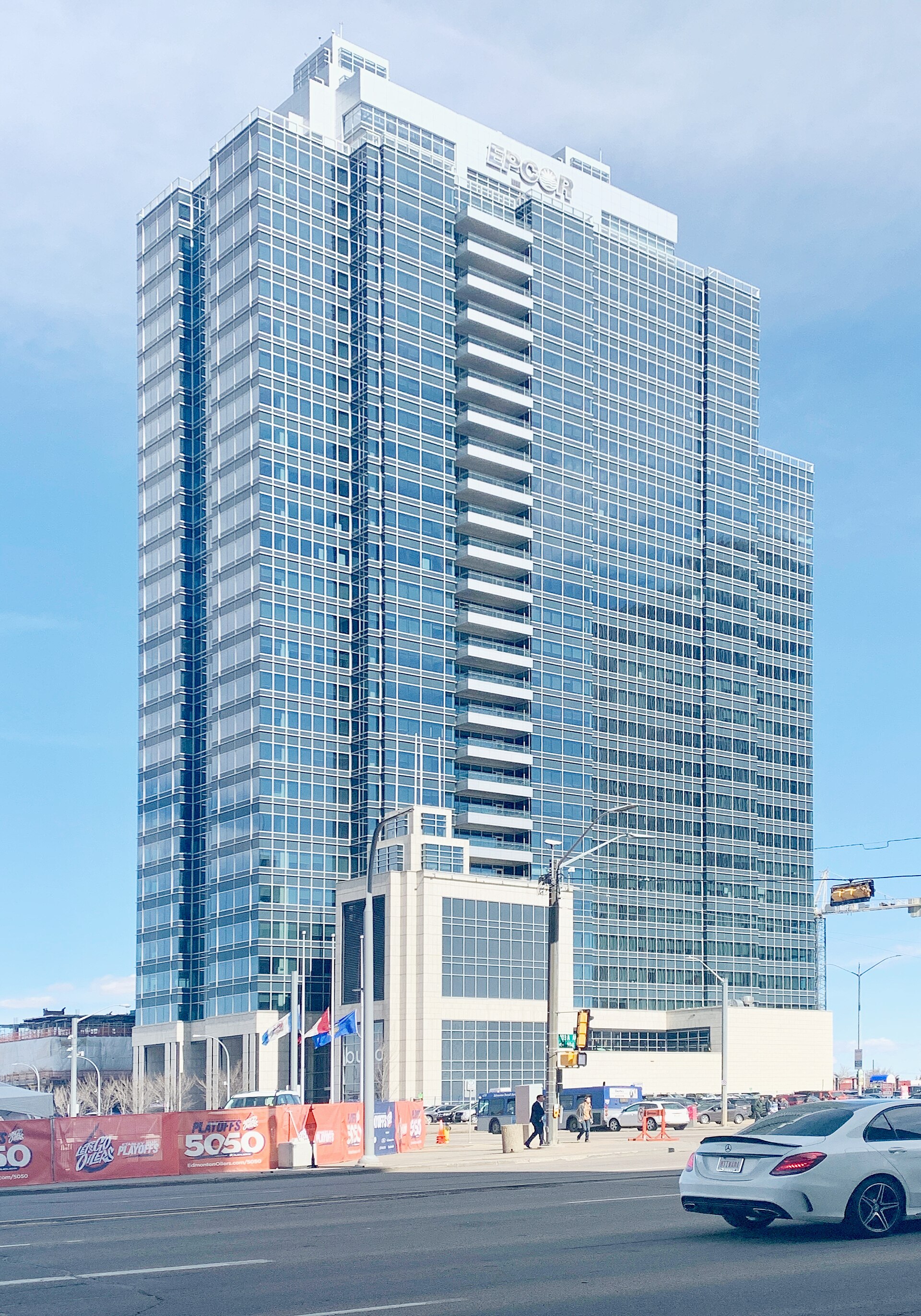
This is the quiet machinery of the compassionate city. A dividend is easier to love than a mill-rate increase because it does not look like the state reaching into your pocket; it looks like a well-run public asset paying its keep. But the money comes from the same place either way. From households. And it comes without the progressivity that makes taxation defensible in the first place. A property tax at least scales, loosely, with what you own. A utility dividend scales with how much water you drink and how cold your apartment gets in January. The tenant in a drafty walk-up and the owner of a heated four-car garage both pay into the same pool, and the poorer household pays a larger share of its income for the privilege. The dividend is regressive by construction, and the people who designed it know that, and they defend it anyway because it is politically painless.
The dividend that only ever climbs
The direction of travel is the tell. Across this council's tenure the dividend rose every year, climbing from $166 million in 2018 to $171 million in 2021 and on to $206 million in 2026. A ratchet that only turns one way, set each November by the utility's board and accepted each year by the City that owns it. The interior years trace the same steady line (on the order of $177M, $185M, $193M, and $201M across 2022–2025, all EST: illustrative interpolations between the confirmed anchors, not independently reported totals). The 2017 drainage transfer shows the mechanism in the open. Council voted 7–6 to move the city's $1-billion-plus in drainage assets into EPCOR, a deal engineered to add roughly $20 million a year to the dividend on top of a $75 million transition fee (drainage transfer 2017). When the City ran drainage directly, the fees residents paid went back into the pipes. After the transfer those same fees became a profit stream flowing up to general revenue. A public service was not privatized to a stranger; it was converted, inside a company the public still owns, from cost-recovery into extraction. That is the whole progressive settlement in one vote. Keep the asset public, run it like a landlord.
Honest complication: the electricity commodity is a provincial story
The eye-watering part of an Edmonton power bill, the price of the electricity itself, is not this council's crime. The UCP government removed the 6.8¢/kWh price cap in 2019, and the regulated rate ran from about $47/MWh in 2020 to $107/MWh in 2021 (EPCOR disconnections + rate context). Councillor Janz is factually correct to point his anger provincewide; deregulation did this. So we do not blame the commodity on city hall. The argument here is narrower and it holds. The municipal instruments are the levers council actually controls: the franchise fee, the dividend, the water and drainage rates council approves. On every one of them the city chose extraction over relief. Janz's own EPCOR page proves the ceiling of the critique. His complaint is that "EPCOR executives shouldn't be making Oilers salaries," and his remedy is that "every dollar spent on compensation is another dollar that could be returned to the City" (Janz on EPCOR). Even the council's leftmost voice accepts the dividend as the good and argues only about who pockets the money inside the utility, never about the residents being milked to fill it.
The franchise fee: a tax that never faced a vote
Look at your power bill for the line marked Local Access Fee. That is a municipal franchise fee: a charge EPCOR collects from you and passes straight to the City for the right to distribute power. And it is rising to about $8.33 a month in 2026, up from $7.94 in 2025 (franchise fee). The City's own documents are careful to note this fee is not in lieu of property tax; it is stacked on top of it. So here is a per-household municipal levy, embedded in an unavoidable bill, that no ratepayer ever gets to vote up or down, described in the tidy language of "stable and transparent" administration. It is a tax by another name, and its only real innovation is that it does not look like one.
How the dividend series was assembled
The dividend figures come from EPCOR's own annual media releases, which state each year's number and the increase (2021–2023 releases; 2023–2026 releases), anchored to the Ivey Energy Centre governance case for the long history: $70M in 2000, held at $140M through the Capital Power years, $166M by 2018, ~$2.3B cumulative (dividend history). The firmly anchored points are $166M (2018), $171M (2021), and $206M (2026); the intervening years, 2022 through 2025, along with earlier gaps like 2015, 2016, 2019, and 2020, are interpolated between those anchors and marked EST. The trend is confirmed and the endpoints are hard, but treat any single interpolated year as an estimate until checked against the City's annual financial reports.
Energy poverty is the point, not the exception
The dividend has a floor, and the floor is human. When the winter disconnection ban lifted in 2022, EPCOR shut off power to about 200 customers. Among them: a woman living on a Canada Pension Plan disability benefit who, after covering rent, simply did not have enough left for her bill (disconnections). The utility calls disconnection "a last resort," and no doubt it is reluctant. But a utility that pays its owner a $206-million dividend can afford to keep the heat on for two hundred of the poorest households in the city, and it chose not to, because the arithmetic of the dividend does not have a line for mercy. This is what carceral neoliberalism looks like when it wears a hard hat instead of a badge. No special cruelty required. Only the ordinary functioning of a public asset optimized to bill the poor and pay the treasury.
Water: the same tool, wetter
The pattern repeats on the water side, one rate filing at a time. A typical residential water bill (water, wastewater, and drainage together) climbed from about $102 a month in 2021 to $113 in 2024 under council-approved EPCOR increases of +3.7%, +2.1%, and +4.2% (water rates). The 2025–2027 wastewater plan, also approved by council, carries the wastewater portion from $74.55 (2025) to $76.91 (2026) to $79.44 (2027). On these filings Janz and Knack are unremarkable yes votes; the utility file passes all but unanimously, and no vote shows either man standing in front of a rate increase. The one honest note of restraint belongs to the company, not the council: EPCOR voluntarily trimmed its return on equity to save wastewater ratepayers about $25.6 million over the term. Sit with how that is framed. A discount, off a monopoly return the utility is otherwise entitled to extract, offered as goodwill. Even the mercy is priced against a baseline of extraction, and the council whose name is on the approval had nothing to do with it. Put the energy and water stories together and the shape is unmistakable. The city that cannot bring itself to tax wealth has found a way to tax necessity, dressed it as prudent public ownership, and pointed, accurately, at the province whenever the bill got too loud to ignore. The commodity is Kenney's. The dividend, the drainage transfer, the franchise fee, the rate filings: those are Edmonton's, voted through by the people it calls progressive. Next, the same regressive logic where it bites hardest: food.