Community and frontline: starved to feed the formula
A city reveals what it believes by what it protects from cuts. Edmonton protects the police budget with a formula and makes everything else that keeps a person alive stand in line each year for whatever is left. This page is that line: the library, the bus, the affordable home, the recreation centre. The through-line is simple. In a budget that is close to zero-sum, a guaranteed raise for one department is a guaranteed squeeze on all the rest. The frontline is not underfunded by accident. It is underfunded by design, to feed the machine described in the police formula.
Housing, built begrudgingly
Start with the least damning part of the record, because honesty is the whole method here. On affordable housing the city did roughly what it said it would. Its 2023–2026 strategy targeted 2,700 units and it committed to 2,922. Target met, and Janz genuinely championed the zoning and density reforms that make housing possible (housing progress report). So the critique is not that they built nothing. The critique is the ceiling of the ambition. Set 2,922 units against the city's own count of 46,155 households in core housing need, nearly one in eight. The target was sized to close under 6% of the gap (scale of need). Of Edmonton's roughly 400,000 homes, fewer than 15,000 are affordable to low-income residents. That is less than four percent, about a quarter of what is needed. And core housing need does not fall evenly: it hits 36% of single-mother renter households, 27% of Indigenous renter households, 19% of racialized renter households. The tell is in how the city describes its own role. It brands itself a leverager: "every dollar invested has attracted another four from other governments." The boast is meant to sound like thrift, but it works as a confession. The municipality treats housing as somebody else's obligation it merely tops up, spending $121 million and $5 million in land to pull in $413 million from senior governments. A city that saw housing as a right it owed its residents would not measure itself by the multiplier on other people's money. It would measure itself by the size of the gap, and the gap is a canyon.
The library the city let inflation shrink
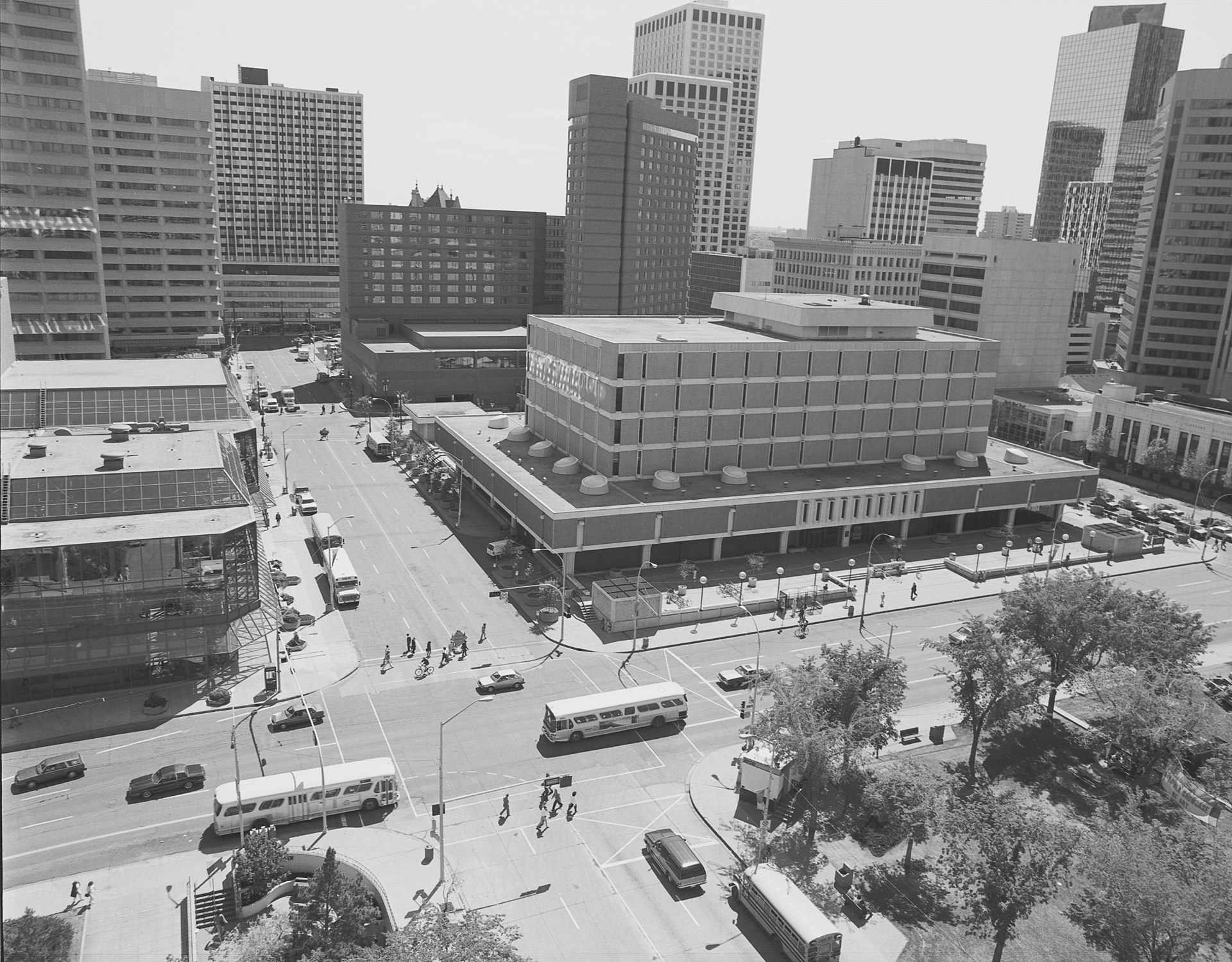
The library is the clearest picture of the squeeze, because Janz drew it himself. Over 2023–2026, by his own figures, EPS funding grew 12.4% while the Edmonton Public Library grew 4% (Janz on police funding). And that 4% sits on top of a slower strangling: the province's per-capita library operating grant has been frozen since 2015, its buying power eaten year after year until provincial money that once covered half of a library's operations now covers about a third (library funding freeze). One institution has a formula that guarantees it more money whether crime rises or falls. The other has a grant that has not moved in a decade while the cost of everything did. That gap encodes a choice about who is essential and who can wait.
The bus that punishes you for being poor
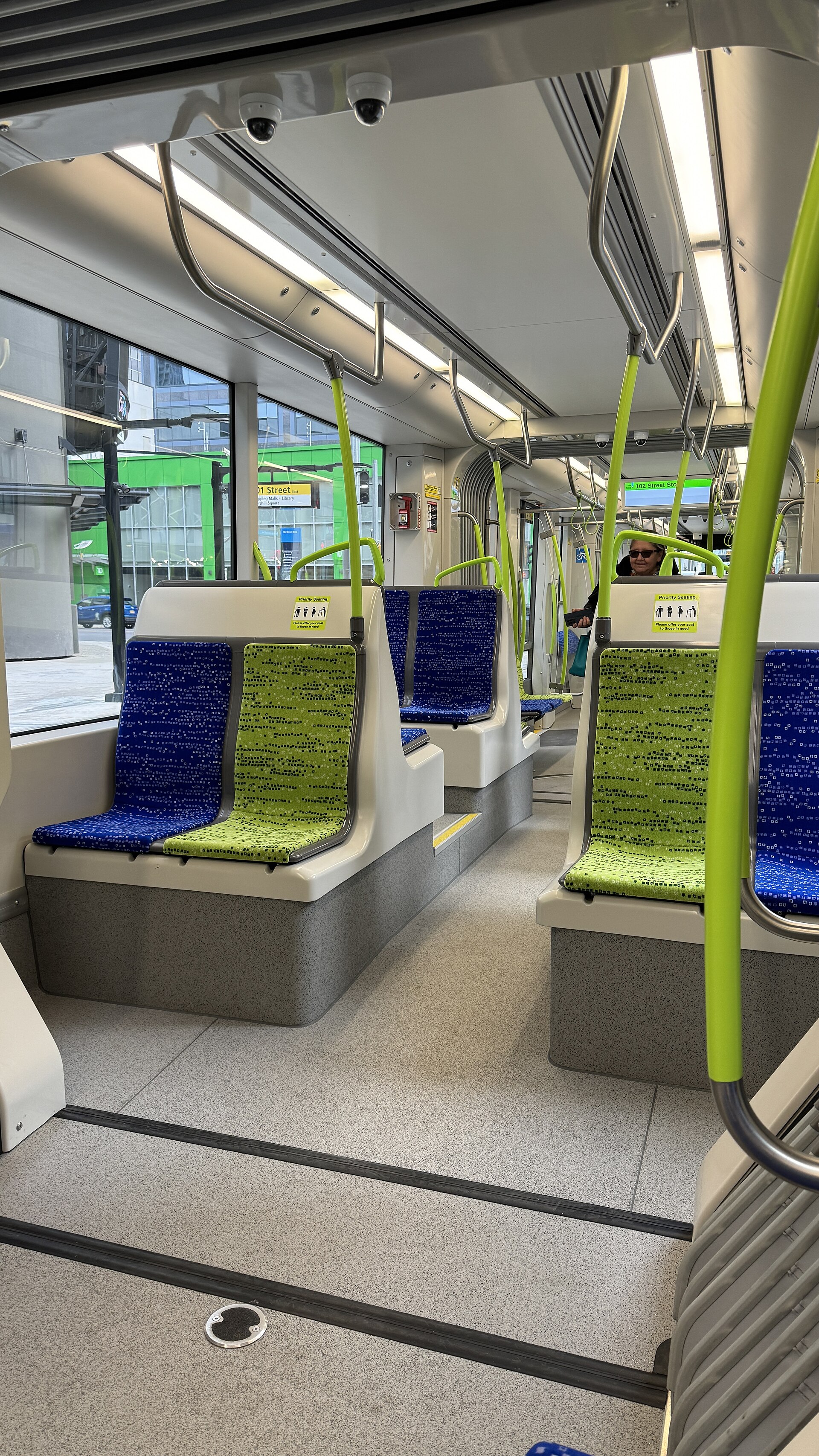
Transit has no formula to protect it, and it shows. Facing a $13-million shortfall, the city hiked fares by roughly 22% for February 2025: the Arc single fare from $2.75 to $3.50, the adult monthly pass from $100 to $120 (transit fare hike). Both the shortfall and the size of that hike are medium-confidence figures, corroborated through Taproot and Daily Hive after the city's own release was unavailable through CBC. The reason the city gave for the shortfall deserves to be read twice: "unexpected growth in demand for low income transit passes." Sit with that. The service got more expensive for everyone because too many poor people used the discount it exists to provide. The frontline is being squeezed by the very poverty it was built to relieve, while the police line rises on autopilot regardless of demand. Then 2025 brought another turn of the same screw: the single ride up again to $3.75, recreation admission nudged from $9.00 to $9.25, and the Youth Pass age ceiling cut from 24 to 18, quietly pricing thousands of young riders out of the discount (2025 fee increases).
The tax that funds order, not care
The bill for all of this landed on the property-tax roll, and it landed hard and late. The municipal increase ran 1.9% in 2022, then 5.0%, then 8.9% in 2024, 6.1% in 2025, and 6.9% for 2026. That is roughly 5.7% a year across the stretch (property-tax increases); the 2025 figure is medium-confidence, corroborated through Taproot and Daily Hive after the city's own release was unavailable through CBC. What matters is not any single number but who names what as the thing that has to give. When council pushed the 2026 rate up to 6.9%, Mayor Andrew Knack explained why he would not cut it lower: "we would have to cut back on transit service, we would have to close libraries earlier, we would have to reduce hours to rec centres. I did not hear an appetite for that" (Knack on the 2026 tax). Every door he named as the potential cut is a frontline door: the bus, the library, the rec centre. The one line he did not name, because a formula has placed it off the table, is the police. And he was "glad that the one increase we saw is in an area that produces a significant economic return". Glad, that is, about the growth-side spending, not about relief for the resident holding the bill. That is the ideology stated in the mayor's own voice: care is discretionary and cuttable, order is guaranteed.
Honest complication: the homicide rate did not rise on a trend
It would be tidy to say a starved frontline let killing climb, and it would not be true. Edmonton's homicide numbers are volatile, not rising: the metro rate ran 3.03 in 2014, peaked at 3.45–3.51 across 2017 and 2021, and fell to 2.20 in 2024. Among the lowest of the decade (StatsCan homicide series). City-only homicides hit a five-year low of 30 in 2024, down from 43 in 2023, with overall crime severity down 5% (2024 crime stats). Knack is right that crime fell, and we concede it. The materialist point survives anyway, in two pieces. First, violence spiked to its worst mid-tenure, in the pandemic years 2020–21, while the police budget grew on a locked formula regardless of which way the line moved. The spending was never actually tracking the danger. Second, the offences that did climb in 2024 are the signatures of criminalized poverty: opioid possession up 152%, methamphetamine possession up 116%, shoplifting under $5,000 up 12%. The carceral apparatus spent 2024 processing destitution, arrest by arrest.
Honest complication: poverty stayed entrenched. Read it as 'entrenched,' not a clean decline
In 2024 the Edmonton Social Planning Council counted about 119,950 people, roughly one in ten, living in poverty, against roughly one in eight in 2015 (poverty profile). Do not read that as a measured improvement. The poverty measures were rebased between those years (the Market Basket Measure was redefined), so 2015 and 2024 are not clean apples-to-apples, and the honest claim is that poverty stayed entrenched across the entire Janz–Knack era, never resolved. The lived arithmetic did not ease: average two-bedroom rent rose from $1,304 in 2022 to about $1,481 in 2024, up 14%, with only 1–2% of low-income-affordable units sitting vacant (Edmonton rent). Rent up, wages flat, a food-bank line around the block. That is a decade of progressive management, and it did not move the material condition of the people it claimed.
What it adds up to
Put the pages side by side and the shape is unmistakable. The police line is guaranteed and the frontline is discretionary, and the men Edmonton calls its progressives administer exactly that arrangement: one authoring the formula and naming libraries as the cut, the other dissenting, losing, and signing the budget anyway. The housing gap is a canyon topped up with other governments' money. The library shrinks by standing still. The bus charges more because the poor dared to ride it. And through all of it the one thing that never had to justify itself was the apparatus of order. This is what "the left is dead" means in a municipal budget: a class of managers keeping the ledger tidy while the people at the bottom of it are fenced, fined, and priced out. The living answer is not on this council. It is in the mutual aid feeding people the city funds at zero, and in the encampment defenders who went to court when no councillor would stop the truck.