Two faces, one dead end
Edmonton calls itself progressive and offers these two men as the proof. Look closer and the proof falls apart. Neither is the most progressive person on council. Michael Janz holds the politics and loses every vote. He casts the most consistent police-restraint vote on council, he is the only one who still says "the capital class" out loud, and he votes no on every police increase, watches it pass anyway, and then signs the budget that pays for it. Andrew Knack does not hold the politics at all. He bends to capital and the police, he moved the funding escalator himself in 2023 on his own motion, and he won the mayor's chair. One is the left that gets outvoted. The other is what a city elects when it wants to feel like the left without voting for one. Two ways of losing the same argument.
The argument here is not that both men are secretly cops. It is simpler, and worse. Take the best case the ballot box produces in this city: a sincere leftist with clean hands and real class language. He cannot move the material outcome. The man who can win is a manager who serves the order. The electoral left is a corpse. What lives is somewhere the ballot never reaches.
"There is no right-wing way to clear snow off the streets. There's no left-wing way to cut our grass. We just have to work together as humans."
"These people, the capital class who have for years dominated city politics, got bounced last election… they're coming back with a lot of money."
Judge Knack on the decade of council votes, not the eight months in the chair. The costume was put on, not born with: in his earlier term he voted for a police-budget cut; by 2023 he authored the formula that made cuts impossible. That hardening is the whole story of what a career in electoral "progressivism" does to a man who wants to keep winning.
The police line that never has to ask
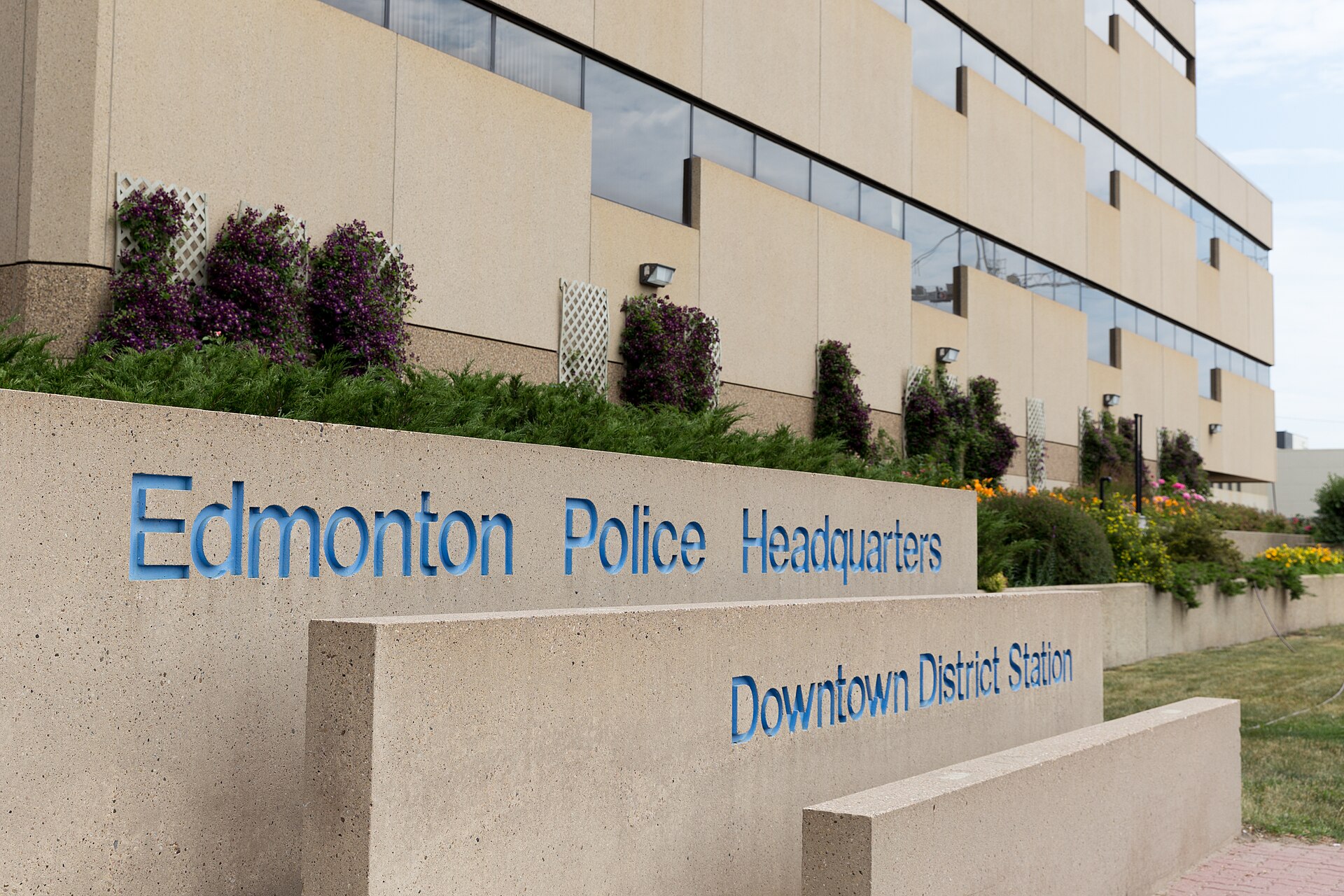
A city budget is zero-sum: every dollar guaranteed to one line is a dollar taken from the fight over all the others. The council praised as progressive took its single largest line and put it on an escalator: the police. Policy C604B, adopted 9–4 on August 23, 2023, on Knack's own motion, hands the Edmonton Police Service a net operating requirement that grows every year without a fresh up-or-down vote. Population, inflation, salary settlements: the number climbs on its own, whether or not anyone re-litigates it. Nothing else that keeps a person alive gets that promise.
And it was never just Knack. Across the whole thirteen-seat council, every restraint vote lost. The police floor 12–1. The formula 9–4. The four longest-serving councillors voted the order line a clean 0 for 9. The ceiling isn't a man. It's the whole room.
Three council-sourced points: $378M (2019), the $407M floor set for 2023, and $475M approved for 2026. The $378M and $475M anchors trace to the sibling EPS budget project and Janz's own page. The ~5%/yr escalator rate lives in the funding formula reports, not the votes; we confirm the adoption, not the percentage.
Up $97M in seven years. About 26%. Now 15.4% of the entire city budget. The single largest thing Edmonton buys, and the only one it promised never to cut.
The province froze the per-capita library operating grant in 2015; it has since fallen from about half to roughly a third of library operating funding. The library fights for its money every year. The police never have to.
The honest complication
The tidy story would be that violence surged and the budget chased it. It didn't. Edmonton's homicide rate is volatile, not rising. It peaked mid-tenure in the pandemic years and fell to 2.20 per 100,000 in 2024, among the decade's lowest, while the police budget grew on its locked formula regardless. What actually climbed in 2024 were the signatures of criminalized poverty: opioid possession +152%, meth possession +116%, shoplifting under $5,000 +12%.
The apparatus was not chasing a homicide wave. It was processing destitution.
The five needs, all rising
Read the tenure against what a person actually needs to live: food, a roof, a rent they can pay, water from the tap, a share of the city's costs that doesn't crush them. Every one of those lines moved the wrong way. Not because of a distant recession the council can wave at, but including the instruments the city controls directly: its own utility's rates, its own property-tax increases. Here are five of them.
Roughly 119,950 Edmontonians were in poverty in 2024. About one in ten. Essentially where it stood a decade before. The compassionate city held poverty exactly still and called that governing.
Knack answers with two claims worth taking seriously: that crime is the lowest in a decade, and that Edmonton is among the most affordable major cities. The first is true, and we conceded it above. It only sharpens the point about who the police actually process. The second dies on the receipts on this page. A city is not affordable when 45,000 people a month line up at the food bank and it starts rationing visits, when a two-bedroom rent climbs 14% in two years while barely 1 to 2% of low-income-affordable units sit vacant. Affordability is a claim; the food-bank line is a fact.
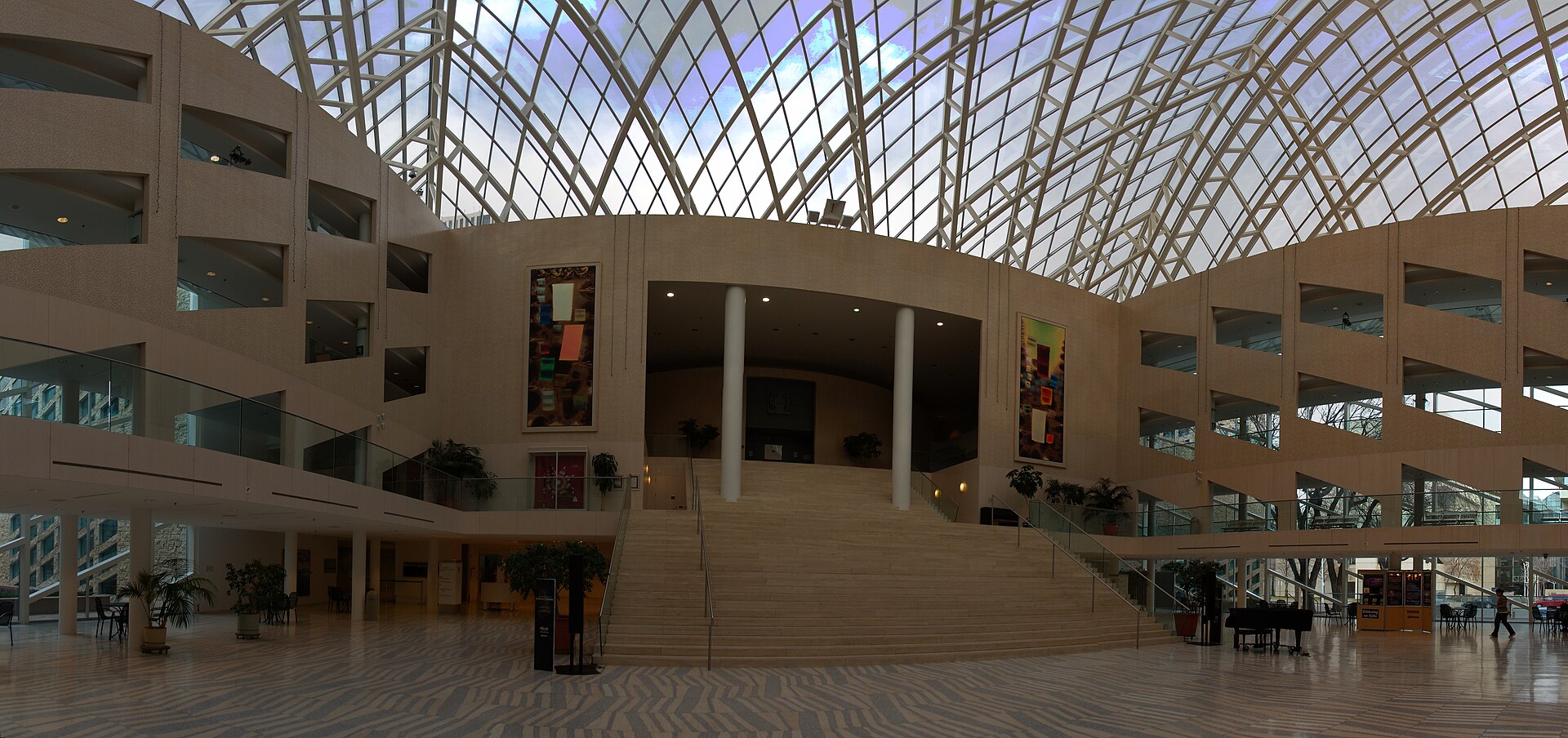
The dissenter who loses
This is where honesty matters most, because it is where the thesis is easiest to fake. We will never tell you Janz supports the police. He doesn't. He votes against them, every time, and every time he loses. Here is the roll-call.
-
Janz moves to cut the 2022 police levy by $11,943,000
Nov 30, 2021 · he is the mover
Janz: YesDefeated 5–8 -
Set police funding at $407,000,000/yr from 2023
Jun 7, 2022
Janz: NoCarried 12–1 -
Approve the police funding formula, C604A
Oct 7, 2022
Janz: NoCarried 9–4 -
Approve the revised escalator, C604B, moved by Knack
Aug 22, 2023
Janz: NoCarried 9–4
Then the hinge
The final 2023 operating budget: the one that funds the police he'd just failed to cut, and carries the property-tax increase
Janz: Yes. He voted for it, and owned the tax hike inside it.
That two-step is the exhibit. Dissent on the record, consent on the money. His own theory of change is "moving the Overton window": the shelved mansion tax, the speech about paying "way too much for the wrong services, at the wrong time, at the wrong place." It is sincere, and it is noise, because a no-vote that always loses and a yes-vote that always funds the thing you opposed is not a check on power. It is the decoration power wears to look contested. This is the best the ballot box offers Edmonton, and it cannot move a single number on this page.
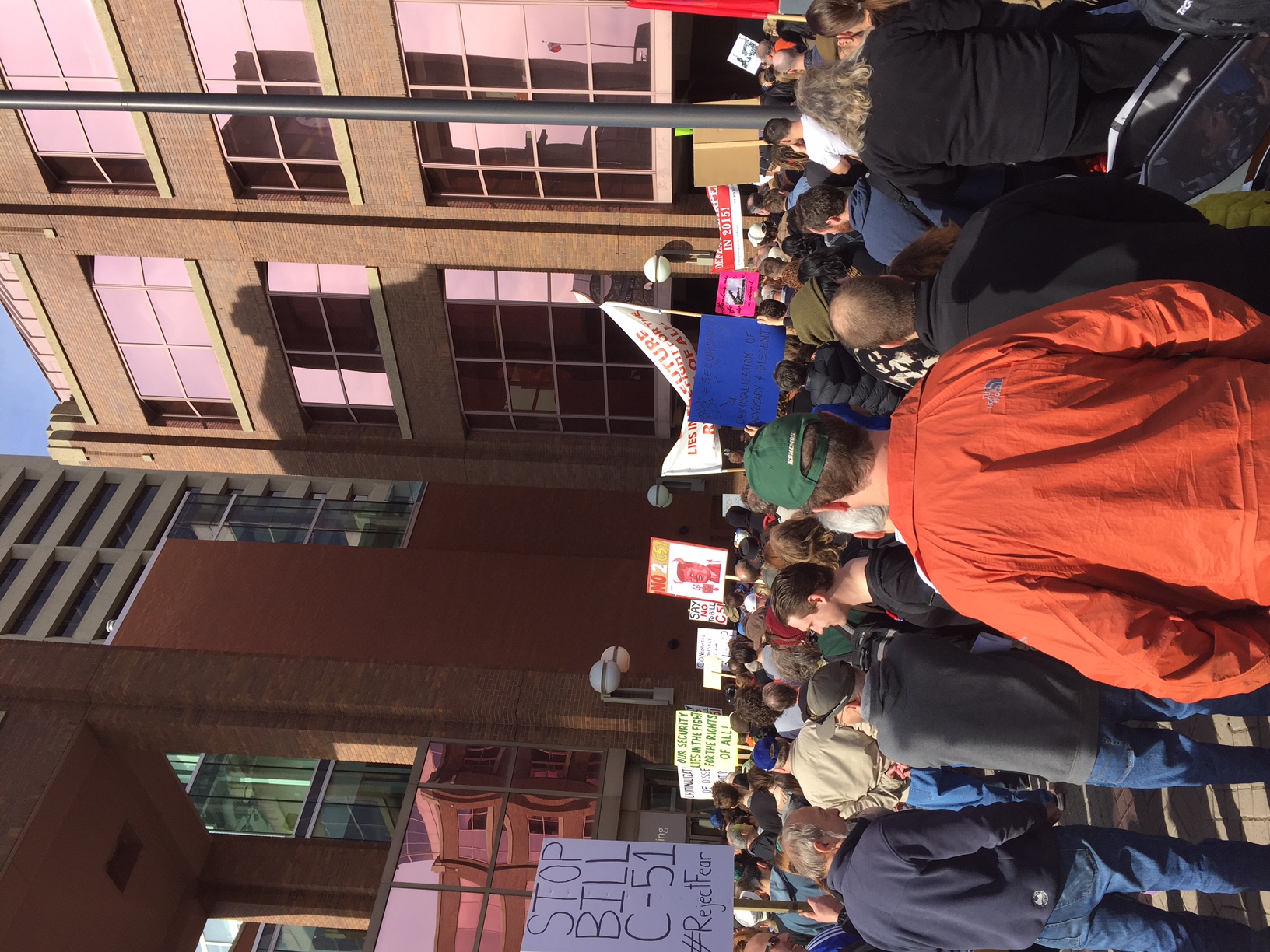
The body count
A budget is a statement of who is allowed to be hurt. The line the council put on autopilot is the one that kills people, and it kills them here more than almost anywhere in the country. Thirty-nine people have died in encounters with Edmonton police since 2000. Second only to Toronto, a force in a city four times the size. The money never had to explain the bodies, because the money was the one thing no vote could touch.
39
people dead in encounters with Edmonton police since 2000
2nd-highest of any municipal force in Canada · Calgary 29
2022
the most fatal police shootings of any force in Canada
~30% of every fatal police shooting in the country that year
9 / 4
officer-involved shootings in 2024, four of them fatal
officer-involved shootings, not the city's gunfire
1
officer charged across the whole tenure; ASIRT cleared the rest
Sgt. Neil Thompson, a non-fatal 2024 assault · a man shot 12 times was cleared
Of the twenty-three people killed in encounters with Edmonton police from 2000 to 2017, twenty-one were in a mental-health or addictions crisis. 91%. The exact people a funded, non-police crisis response exists to reach. The city guaranteed the budget of the service that met them with a gun, and funded the crisis response that might have met them otherwise at a fraction of it.
The city guaranteed the money for the machine that does the killing, and never once had to guarantee the money for the thing that would make so much of it unnecessary.
The honest complication
There is no clean year-by-year count of police killings to graph, so we don't draw one. The honest figures are the anchors: 2022, 2024, and the total since 2000. "Officer-involved shootings" are not the same as the city's gunfire; when EPS reports 221 "shootings" in 2023, that is citywide gun violence, not police pulling triggers. EPS itself buried two officers to gun violence in 2023 and points to that to justify the force. And nothing here says the budget line pulled a trigger. The claim is correlation and priority, never that any budget vote pulled a trigger.
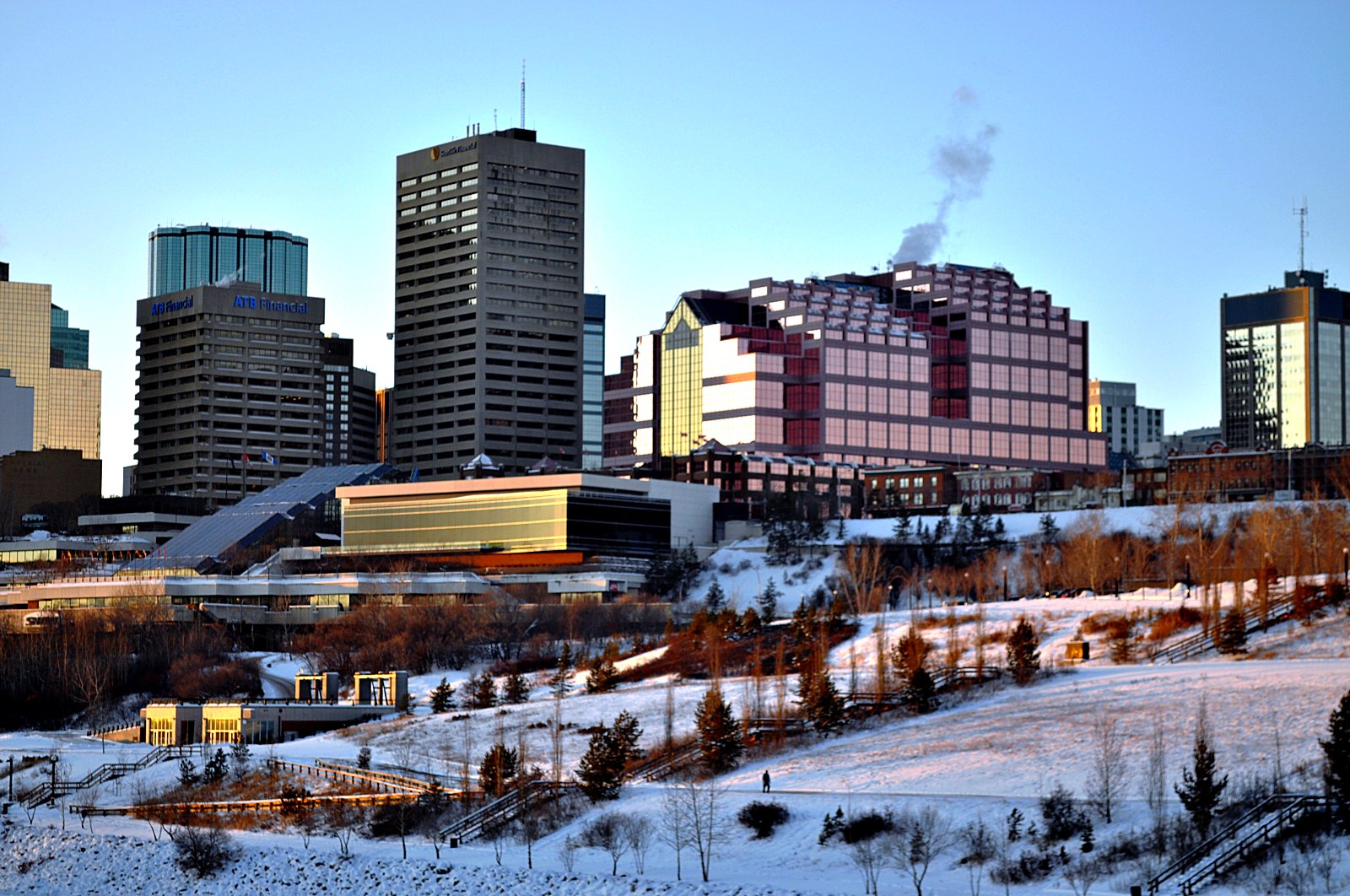
The cold has a signature
The sweeps have a medical signature, and it is written on unhoused bodies in fingers and feet that do not grow back. Edmonton is what the Canadian Frostbite Care Network calls the country's frostbite capital. In the Edmonton health zone, the number of frostbite amputations climbed year over year as the tents came down. Not a smooth line, but a rising one, more than five times the level of a few winters before.
Edmonton-zone amputations from an access-to-information request. A separate calendar-basis count for the wider Edmonton area, 81 in 2023 and 120 in 2024, tells the same story on a different ruler. The two use different geographies and definitions and do not stack, so we chart only the one series and let the other corroborate it. Part of the rise is better counting after the records were pried loose; the steep shape and the majority-unhoused share survive it.
By 2022-23, unhoused patients were 58% of the frostbite-amputation visits. A group that is roughly a third of one percent of the city, absorbing more than half the harm. Frostbite starts at 0°C; the city activates extra winter services only after three days below −20°C, the harshest such benchmark in Canada. The December 2023 sweep ran under a court order to weigh the cold. It cleared all eight camps anyway. The last came down at −24°C.
The honest complication
The dead are counted separately, and carefully. Homeless deaths in Alberta rose from 37 in 2019 to 302 in 2023. But that figure is every homeless death, the majority of them overdoses, and the province withholds the cause breakdown, so no one can say how many froze, and we will not. The clean cold-specific number is the amputations. What survives every caveat is the shape of the curve and who is on the wrong end of it. Correlation and priority, not a claim that any one sweep took any one toe.
Long live the left
When the sweeps came, the electoral left did not stop them. A coalition of the living one tried. The Coalition for Justice and Human Rights sued the city in August 2023 to halt the encampment removals. While the injunction was still being fought, the city cleared all eight high-risk camps between December 29 and January 10. On January 16, 2024, a judge denied the Coalition standing on procedure, never reaching the Charter question, and ordered it to pay the city $11,500 in costs. The city had asked for $25,000.
One day after standing was denied, the city stood up an Emergency Operations Centre and razed 49 encampments in two weeks: 211 structures, 175 people. Across 2024 it dismantled roughly 3,819 camps, about double the year before. Of some 231 people funneled through the Navigation Centre in one stretch, fewer than a quarter got so much as a housing referral. 65. Then came Bylaw 20700: $250 to pitch a tent, $250 more to sit in it. And the $225,000 of fence, to make sure no one came back. That is the through-line of this whole page, wet with rain and lit by floodlight: a state that criminalizes the poverty it refuses to end, in a progressive costume.
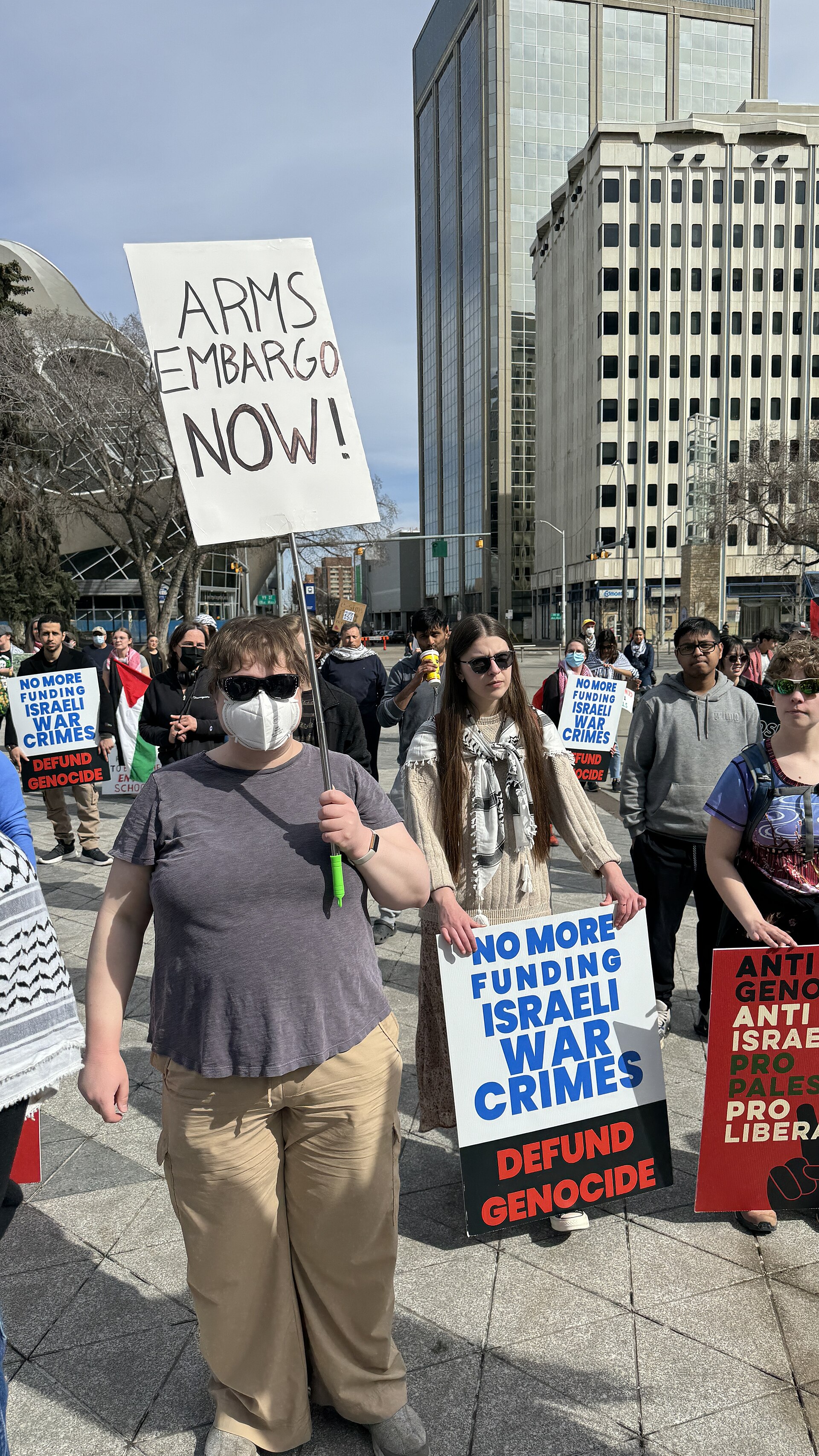
And the costume does not come off for Gaza either. As mayor, Knack said the compassionate thing out loud. He rebuked his own police chief for joining a police delegation to Israel, in the language of solidarity: "Families in our community are grieving… Decisions like these cause real hurt." Take him at his word; it was right to say. And it comes to exactly the same nothing as his compassion for the frozen, because the same EPS whose budget he put on autopilot is the force that cleared the University of Alberta's Palestine-solidarity encampment with batons and pepper spray in May 2024. A decision the university president made and the police carried out. Care in the register, order in the apparatus. Over the whole 2021–2025 term, across 8,412 recorded motions, council never once brought a Gaza ceasefire resolution to a vote. The demand filled the streets for two years; the chamber full of progressives answered with silence. Every word of this is about a state and its policing of protest. Never a people, never a faith.
And the silence has an enforcement mechanism. When Edmontonians brought the criticism straight to the body that is supposed to hold the police to account, the answer was to reach for the off switch. Commission chair Ben Henderson is the former councillor who unilaterally approved Chief Warren Driechel's February 2026 trip to meet the Israeli police, with no public discussion among commissioners. He watched two dozen residents use their five minutes to condemn it and call for his resignation, then said he is considering ending the public-feedback portion of the commission's meetings altogether. The oversight body, criticized, moved to delete the criticism. It had already narrowed how the public could speak once, in 2024; this would shut the door. Structural complicity is not a metaphor here: it is a chair with his hand on the microphone switch.
The same force clears the Palestine camp and razes the majority-Indigenous homeless camps. Community signatories named both as violations of Treaty 6. One logic, one force, one stretch of stolen ground, the river valley to Gaza.
So where is the left, if it is dead on the ballot? It has a name. Many of them. The Coalition for Justice and Human Rights, which sued the city and takes no government money on principle. Food Not Bombs Edmonton and Water Warriors YEG, feeding hundreds a week on no city money at all. HARES and the Bear Clan Patrol, community safety and overdose response run without a cop. The Edmonton Renters' Union, organizing tenants against the landlords the ballot delivered rent hikes to. The Canada Palestine Cultural Association and the People's University for Palestine; Idle No More, co-founded in this Treaty 6 land; Migrante Alberta, organizing the workers furthest from any ballot. Every one of them does the thing a motion that loses 9–4 cannot: it directly keeps someone alive.
Cartmell's developer money raised $834,552, about half of every campaign dollar in the city, and spent over $1M, the most expensive campaign in Edmonton history. It lost. The money lost once. The complicit can lose next.
How to read this
We do not brand the mayor complicit in genocide or a sympathizer of the Israeli state. That charge is unsourced, and his rebuke of the police chief's Israel trip cuts against it. We publish only what the record holds: council-wide silence, and structural complicity through the police he funds. The encampment clearing was the university president's decision, executed by EPS; the injuries are a documented dispute. "Come down on these institutions" means organizing, material solidarity, and voting the complicit out.
So when we say the left is dead, we mean the one on the ballot: the one that speaks of care, funds the order, and went silent on a genocide while the streets shouted. The living left is the coalition that sued the city and paid for the privilege, the fridges the city funds at exactly $0, the people who stand between a bulldozer and a tent. The move that loses is silence; the move that wins is conviction. So the honest instruction to anyone who calls themselves progressive here is to come down on these institutions with the full chest, electorally and materially: the police, and complicity with the Israeli state's war. Stop mistaking a polite frown for resistance. Confront them, or keep managing them and watch the police state stand.
Conviction wins. The costume loses.
Long may the living left run.