
I
The facts on the ground
Two enormous data centres are being built in Alberta at once. Meta is spending more than $13 billion on its first Canadian data centre in Sturgeon County, northeast of Edmonton, alongside a roughly 932-megawatt gas plant to feed it. Separately, a company called Synapse has proposed a $10 billion AI data centre in the town of Olds, population 9,679.
The Olds project is the clearest window into how fast this is moving. The developer approached the town in November 2025. The public announcement came on 27 January 2026. The land was rezoned two weeks later, on 9 February. Residents said they first heard about it door-to-door. Alberta's own utilities commission rejected the first application for "significant deficiencies," and over 1,000 people registered to fight it at hearings.
Premier Danielle Smith has spent the summer reassuring the province, telling a Red Deer chamber audience that Meta can be "a good neighbour, a good corporate citizen." Critics point out that the aggregate power demand of all Alberta's proposed data centres runs to roughly 21 gigawatts, more than double the province's average electricity consumption, and that the associated gas plants draw serious water and emissions. Meta says its cooling is closed-loop. The province says the grid can cope. The residents in the hearing rooms are not convinced.
II
The rush is the tell
Ask why the hurry. When a government fast-tracks tens of billions of dollars, waves away a utilities-commission rejection, and treats a thousand registered objectors as an inconvenience, the speed itself is information. This is a priority that overrides consent.
A priority for what?
The official answer is jobs and AI. But the permanent-jobs numbers are small, the compute is mostly for rent to companies far away, and the environmental costs land locally and permanently. To understand what a data centre is really for, stop reading the press releases and watch what this exact class of infrastructure is already being used to do, in places where the gloves are off.
III
What is already here
The surveillance layer is not a future worry. It is being installed in Alberta right now. In December 2025, the Edmonton Police Service began a proof-of-concept trial of facial-recognition body cameras, running up to fifty officers' cameras against a police database. The hardware is Axon's; the facial-recognition algorithms come from an Israeli firm, Corsight AI.
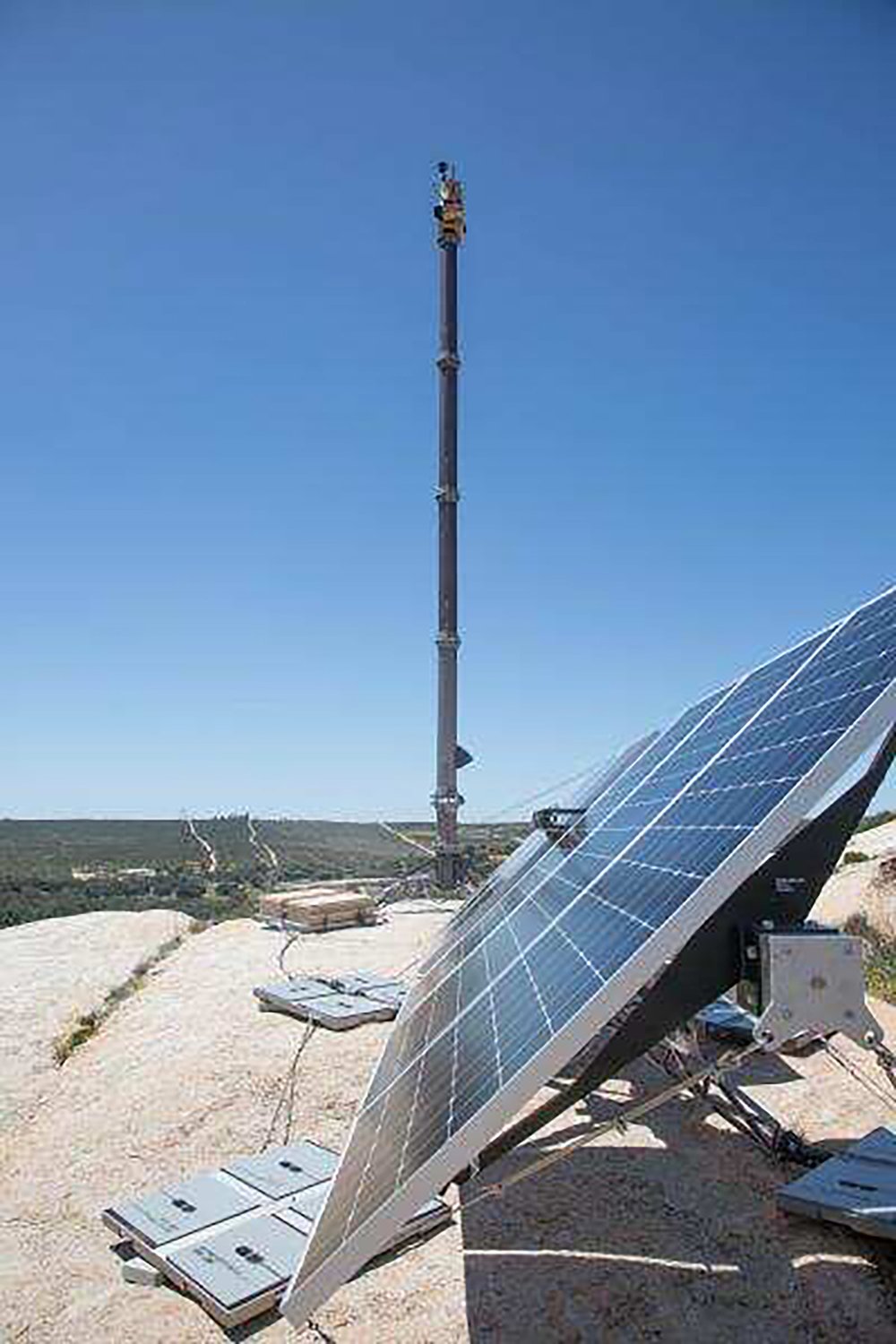
Corsight is co-owned by Awz Ventures, a Canadian investment firm whose advisory committee is chaired by former prime minister Stephen Harper, and which seeded Corsight with US$5 million. Axon, the body-camera vendor, is also a $150,000-a-year "capstone sponsor" of the US Major Cities Chiefs Association. Add the police drones and AI-analytics surveillance towers that CBC has documented scanning rural Alberta, and the apparatus is already taking shape.
The pipeline has a personnel department too. In February 2026, EPS Chief Warren Driechel flew to Israel with a delegation of North American police executives to meet Israeli state policing officials — a trip organized and paid for by the same Major Cities Chiefs Association that Axon sponsors. Reporting by The Orchard later showed the itinerary included illegal West Bank settlements. Edmonton mosques, Palestinian organizations, and more than twenty groups signed an open letter to the police commission asking which Israeli policing practices had been learned and whether they would be used on Edmontonians. The mayor said the trip "caused real hurt" and broke trust; the chief stood by his decision. The service called it educational. The open letter asked the right question: educated in what?
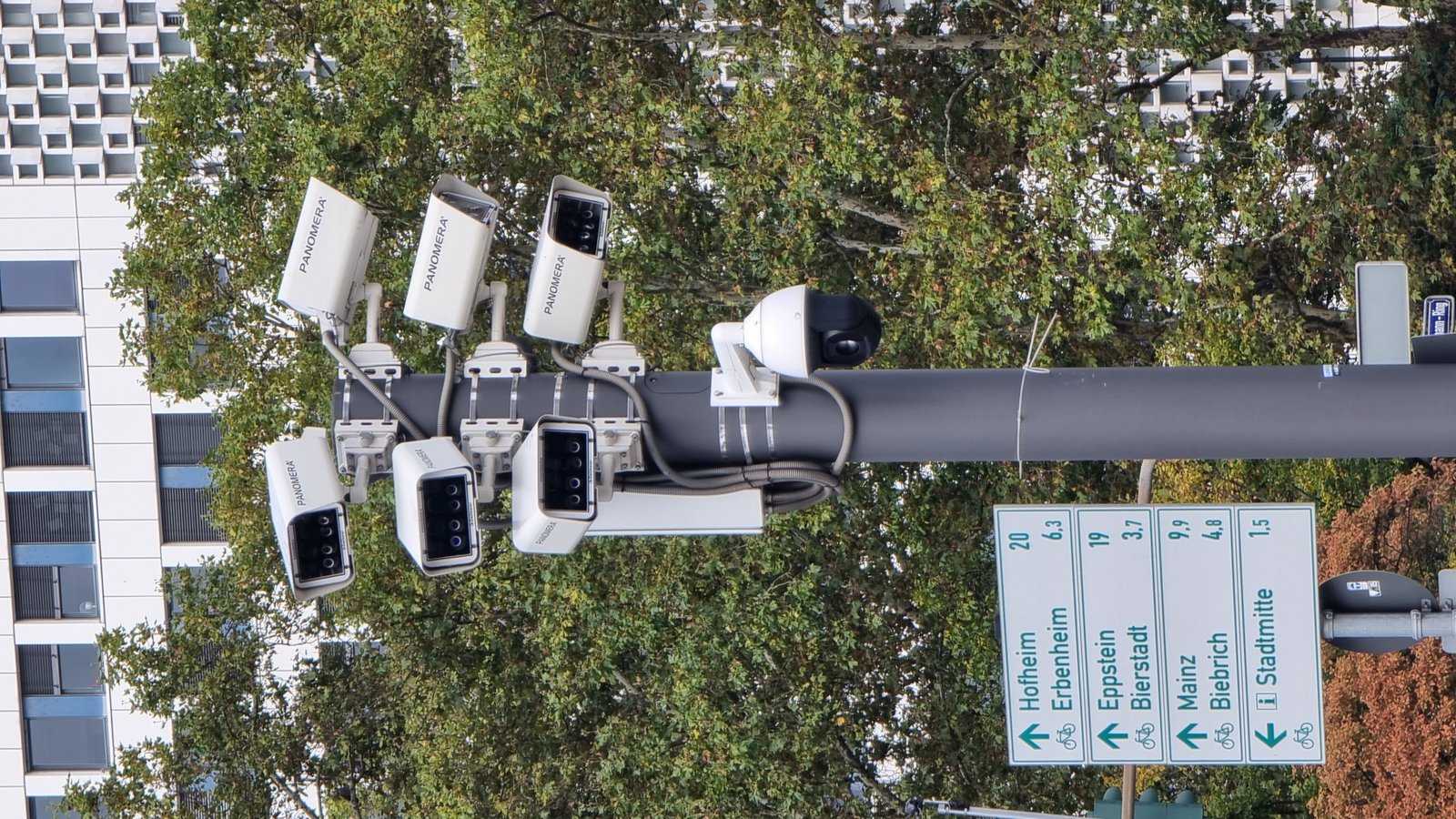
The apparatus
Facial recognition, on Edmonton police, running Israeli algorithms tied to Stephen Harper's investment firm.
EPS release, Dec 2025 · Biometric Update · The Breach · Photo: B. Schwabe / CC BY-SA 4.0
IV
The playbook, part one: Gaza
This is not hypothetical. In Gaza, the Israeli military has used AI systems, reported by +972 Magazine and The Guardian on the testimony of Israeli intelligence officers, to generate targets at machine speed. One system, "Lavender," marked some 37,000 Palestinians as suspected militants; officers described approving strikes in about twenty seconds each, against a known error rate. Another, "The Gospel," recommends buildings.
These systems run on cloud infrastructure. Google and Amazon hold a $1.2 billion Israeli government contract, Project Nimbus. And in the single clearest link between a commercial data centre and lethal use, a joint Guardian and +972 investigation found that Microsoft Azure stored a vast trove of intercepted Palestinian phone calls for Israeli military intelligence, used to plan strikes and arrests. Microsoft later revoked the services. The data centre is the engine.

Machine-speed targeting
AI picks the targets. Commercial cloud runs the machine. Amnesty and the Institute for Palestine Studies call it what they see: genocide.
+972 Magazine · The Guardian · Amnesty International · Photo: IAI Heron UAV, IDF / CC BY-SA 3.0
V
The playbook, part two: the United States
Look south and the same tools appear, pointed at people. Palantir built US Immigration and Customs Enforcement a system, "ImmigrationOS," to locate and rank people for deportation, integrating government databases with commercial data brokers regardless of the errors in them. ICE detention has hit a record 73,000 people, with roughly $45 billion appropriated to expand it toward 135,000 beds.
The surveillance sold to towns as crime-fighting does not stay in its lane. "Flock" automated licence-plate cameras, marketed for stolen cars, have quietly been searched thousands of times on ICE's behalf through local police, including by departments that never authorized it. The same network has been used by officers to stalk their ex-partners, at least eighteen have been caught, one ran a woman's plate nearly 400 times. Flock has begun bolting microphones onto the poles to listen for human voices, and a leaked internal tool called "Nova" is built to jump from a licence plate straight to the person behind it.
Meanwhile the government has used immigration law to detain and try to deport people over political speech, students like Mahmoud Khalil and Rümeysa Öztürk, in cases where federal judges have already found First Amendment violations.
Built to fight crime
Data-broker targeting, record detention, and "crime" cameras feeding a deportation machine. The tools do not stay in their lane.
ACLU · EFF · American Immigration Council · Photo: CBP
VI
Meet the landlord
This is the company Alberta handed the keys to. Amnesty International found that Meta's algorithms "substantially increased the risk" of the Rohingya genocide in Myanmar by amplifying incitement. In July 2026 the European Commission preliminarily found Instagram and Facebook's addictive design in breach of EU law. In March 2026 a New Mexico jury found Meta harmed children and hid what it knew, with a $375 million penalty.
While courts and regulators pile up findings, Mark Zuckerberg has been expanding a Hawaii compound valued past $300 million, buying another 962 acres for over $65 million. This is who is building Alberta's "nerve centre."

A rap sheet, not a résumé
Rohingya. An EU breach finding. A jury verdict on child harm. A $300M bunker-estate. The landlord's record is public.
Amnesty · European Commission · PBS NewsHour · Robb Report · Photo: A. Quintano / CC BY 2.0
VII
Why now
The people pouring this concrete can read a graph. Global warming is accelerating faster than forecast, and Alberta is on the front line. The province burned 2.2 million hectares in the record 2023 fire season. Jasper lost a third of its town in 2024. In 2024 the government opened unprecedented water-sharing negotiations as drought forced irrigation cuts of up to a third.
The honest version of the fear is this: mass evacuations are becoming a routine feature of prairie life, and they will get worse. Fort McMurray displaced 88,000 people in 2016; northern Manitoba evacuated some 15,000 in 2025. No one can promise you a specific refugee number by a specific year, and anyone who does is guessing. But you do not need a forecast to notice that when the wealthy plan for climate collapse, they build private firefighting and bunkers for themselves, and surveillance for everyone else.

The clock
The crisis is early, and they know it. Power gets nervous before a storm it cannot stop.
WMO · Nature · Canadian wildfire records · Photo: D. Reilander / CC BY-SA 4.0
VIII
The argument, stated plainly
Here is the pattern, and it is an argument, not a confession dragged out of anyone. No official has to admit a motive. You only have to watch what the infrastructure does. In Gaza it targets. In the United States it hunts. The same cloud providers, the same camera networks, the same surveillance firms are being poured into Alberta at a speed that overrides consent, precisely as the climate turns and the powerful start bracing for a wave of angry, displaced people.
Run that clock forward. Climate breakdown, foreign wars we are told to fund, and more and more people displaced and angry on the street add up to what a government that has chosen force calls a control problem. A data centre full of cameras, cloud, and analytics is how you manage one. That is what this class of infrastructure is for, everywhere it is already running.
Build the tools first.
That is the warning. Not that a secret plan has been signed, but that a surveillance and control apparatus is being assembled here, out of the same parts, by the same companies, ahead of a crisis everyone building it can see coming. The indifference to your objections is not a bug. It is what a priority looks like.
IX
What to do
The response is not despair. It is organization. Show up to the hearings, the Olds ones and the Sturgeon ones, and back the residents already fighting. Demand binding conditions on these projects and real limits on police surveillance procurement before it becomes permanent. Defend privacy, encryption, and the right to organize offline, where no camera reaches. Build mutual aid, tenant power, and community infrastructure that does not depend on the goodwill of the people building the cameras.

The prairies
Build power no camera can capture.
Solidarity march, Edmonton · Jason Woodhead / Wikimedia Commons · CC BY 2.0
Defeating AI data centres is
defeating fascism on the prairies.